
From the struggle for abortion rights in Italy to the campaign for a more united Europe, Emma Bonino treated freedom as a responsibility, not a settled achievement. A personal remembrance of a politician whose causes mattered more to her than their electoral rewards.
I remember Emma Bonino from Italian television long before I properly understood who she was.
Growing up in Italy in the 1990s, I would see this small, determined woman on screen with an unmistakable voice and presence. On television, so often dominated by entertainment, spectacle and frivolity, she stood out to me. She was serious without being solemn, stubborn without seeming particularly interested in pleasing anyone, and above all independent in thought.
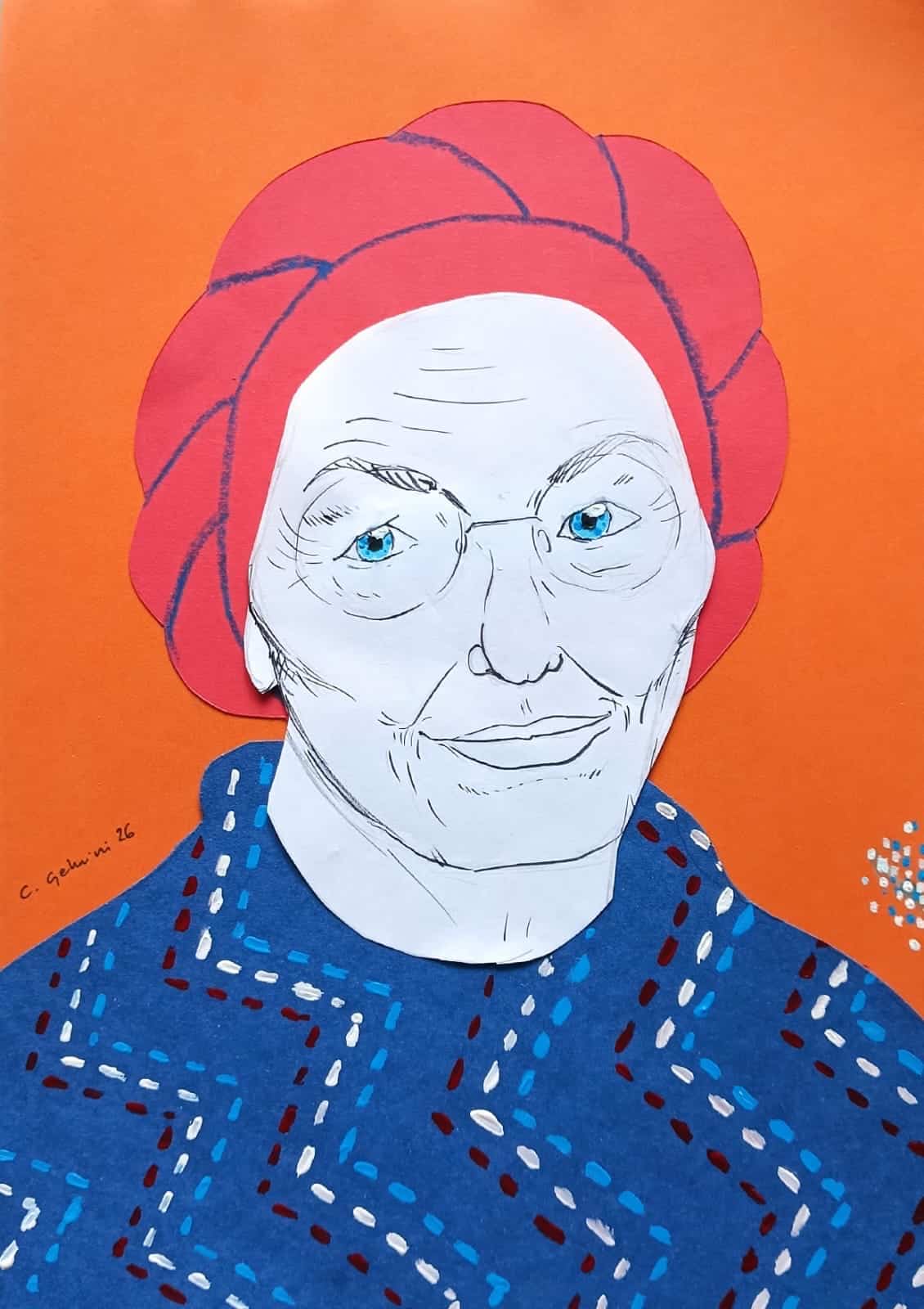
Emma Bonino died in Rome on 11 September 2026, aged 78, after more than fifty years in Italian and European public life. She had been a member of the Italian and European parliaments, a European commissioner and Italy’s foreign minister. But a list of offices explains relatively little about her. Her political life is better understood through the causes she chose — often before they became comfortable, mainstream or electorally rewarding.
Italian President Sergio Mattarella said that Bonino had “left a mark on the life of the Republic through her tenacious and consistent commitment”, describing her as “Radical, liberal, feminist, staunchly pro-European” and recalling her work against the death penalty and for international criminal justice.
On 15 September, Italy honoured her with a secular state funeral at the Campidoglio, the historic seat of Rome’s city government and one of the country’s most resonant civic symbols, attended by Mattarella, Prime Minister Giorgia Meloni and representatives from across the political spectrum.
From personal experience to political action
She was born in 1948 in Bra, a town in Piedmont in north-western Italy, into a farming family. As she later recalled, a fairly clear future had been imagined for a daughter: remain close to home, marry, settle down. She chose a different path early on. Against her father’s preference, she chose a classics-focused secondary school rather than a teacher-training school; at eighteen she left Bra for Milan, eventually graduating from Bocconi University with a thesis on the autobiography of Malcolm X. Years later, she would recall her difficulty in explaining that need to leave to her father as one of her few regrets.
Politics came soon afterwards, through an intensely personal experience.
In 1974, Bonino had a clandestine abortion. Abortion was still a criminal offence in Italy, although clandestine procedures were widespread and often carried out in improvised, unsafe conditions, putting women’s health and sometimes their lives at risk. She later described the humiliation of having to travel secretly to Florence and depend on strangers for such an intimate decision about her own body. On the train home, something had changed.
She began volunteering and soon joined CISA, the Information Centre on Sterilisation and Abortion. The organisation helped women obtain abortions in safer conditions and with greater dignity, while openly challenging the existing law. The point was not only to legalise abortion as a matter of individual freedom, but to bring a widespread clandestine practice into a medical and legal framework in which women could receive proper care.
Her campaign challenged not only the law, but a deeply rooted social order, in an Italy where the Catholic Church still carried considerable weight in public debates over family, sexuality and reproductive rights.
In 1975 she was arrested in Bra for her involvement in the campaign. The illegality was not hidden: making it visible was precisely the point. The Radical strategy was to force into public view something already happening every day behind closed doors. Three years later, Italy’s parliament passed Law 194, legalising abortion under specified conditions.
This was also the beginning of her long political partnership with Marco Pannella, the charismatic and unconventional leader of Italy’s Radical Party, a secular, liberal movement centred on civil rights and individual freedoms. The Radicals were rarely a major electoral force, but their influence on Italy’s civil-rights debate was considerably greater than their numbers suggested. Referendum campaigns took these arguments directly to voters. Hunger strikes, non-violent protest and deliberate acts of civil disobedience were other ways of bringing pressure to bear on the political establishment.
Together, Pannella and Bonino campaigned on issues ranging from reproductive freedom and prisoners’ rights to the death penalty, international justice and, later, end-of-life choices.
One lesson from Pannella remained with her. In a 2018 interview, Bonino recalled him telling her: “If you want something not to be known, there is only one way: don’t do it.”
For her, as for me, that idea also speaks directly to freedom: once something in your life can be used against you, part of your independence has already been surrendered.
Rights beyond borders
Her activism eventually moved from Italian civil rights into international politics. As European commissioner for humanitarian aid in the 1990s, she travelled repeatedly to conflict zones, including the former Yugoslavia.
In July 1995, immediately after the capture of Srebrenica, a UN-designated safe area in Bosnia and Herzegovina, by Bosnian Serb forces, she travelled to the Bosnian city of Tuzla, where survivors were arriving while thousands of Bosnian Muslim men and boys remained missing. Within days, she was publicly sounding the alarm about the scale of what had happened, using the word “genocide” while much of the picture was still emerging. The massacre would later be legally recognised as genocide by the International Criminal Tribunal for the former Yugoslavia and the International Court of Justice.
Her experience in the Balkans became part of a broader commitment to international criminal justice, including the campaign for a permanent International Criminal Court. Mattarella described that work, along with her campaigns against world hunger and the death penalty, as a source of pride for the Italian Republic.
The scale was different, but the principle was remarkably similar to the one that had brought her into politics twenty years earlier: rights mean little when institutions are unwilling or unable to protect them.
Throughout her career, Bonino remained closely identified with European federalism. In her later years she was one of the founders of +Europa (More Europe), a liberal, pro-European party. She argued not simply for the defence of the European Union but for deeper political integration, a common foreign policy and, ultimately, a federal Europe. In 2024, she was still campaigning explicitly for the “United States of Europe”: a Europe capable of acting collectively rather than remaining paralysed by competing national interests.
It was also the priority she carried to the end of her life. In his statement after her death, Mattarella noted that in her final years “her priority was the unity and greater integration of the European Union”.
And she continued to speak about individual rights — including end-of-life choices — from essentially the same starting point: recognising another person’s freedom does not require making the same choice oneself.
“Recognising another person’s freedom does not require making the same choice oneself.”
Freedom as a responsibility
Looking back now at the woman I remember from television in the 1990s, I think this is what made her so recognisable even to a child who knew almost nothing about politics.
It was not simply determination. It was the impression of someone who had decided, very early on, that doing things as they had always been done was not, in itself, a reason to keep doing them.
A defining principle of Bonino’s politics was that rights do not become worth defending only when they affect us personally. In a 2023 interview, she remarked that people are often sensitive to the violation of their own rights, but not “those of their neighbour”, seeing this as a dangerous fragmentation, and insisted that rights already won must continually be cared for, protected and defended.
She repeatedly fought for freedoms she might never need to exercise herself, and for people whose lives and choices were far removed from her own. In a political culture where causes are so often weighed against their electoral returns, this reflected a demanding idea of public responsibility: a right does not have to be yours for its defence to concern you.
For Bonino, freedom was never something acquired once and for all. Her legacy asks something of us: to exercise that freedom — and keep defending it.
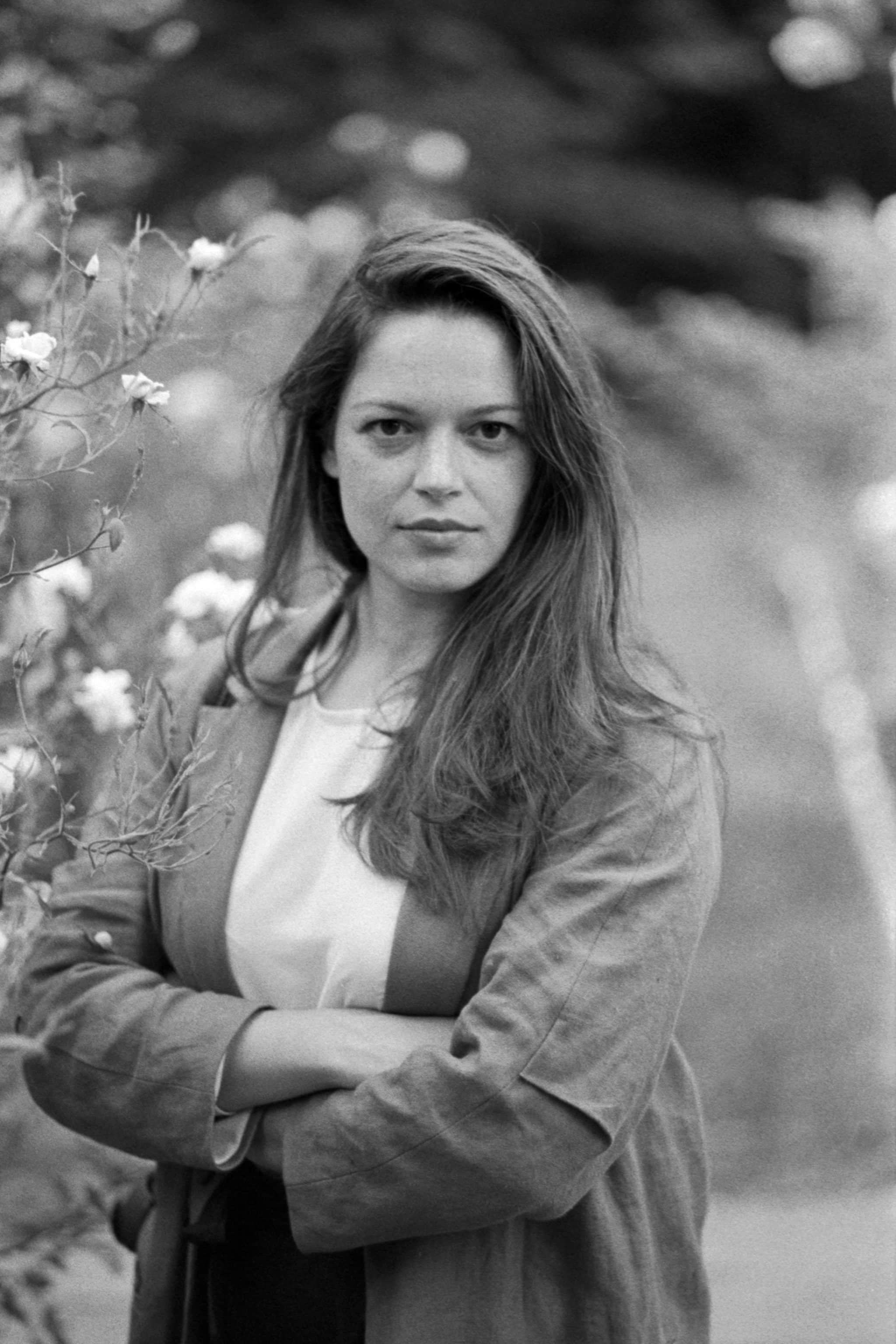
Chiara Gelmini is an Italian art writer, curator and interdisciplinary artist. With a background in visual and performing arts and aesthetics, she works across contemporary art, music, performance and cultural education. Her work is shaped by travel, cultural crossings and the porous thresholds between places, disciplines and artistic languages. Her writing explores the relationships between artworks, exhibition contexts and audiences, and art as a space for encounter. Read more articles by Chiara Gelmini here.
Samtliga artiklar i Critical Point #14+15
Sofia Thoresdotter: Hur kan du veta det? Om språket, makten och det heliga seendet
Emil Erdtman: Freedom Drive i Bryssel – rätten att bestämma över sitt eget liv
Jakob Wood: Psykologens intellektuella ansvar att tänka själv
Channa Bankier: Bländad av det asiatiska ljuset – drömmen om (det maoistiska) Kina
Ulf B Andersson: Krigets långa skugga över Balkan
Chiara Gelmini: Emma Bonino’s Legacy: The Responsibility to Defend Rights and Freedom
Mira Horovitz: I släktens spår i Budapest
Mira Horovitz: Sörjbara liv och värdighet vid livets slut
Sonia Engström: Szymon Laks – musiken som räddade och återskapade liv
Massood Mafan: Så länge någon läser henne, finns Shahrnush Parsipur kvar
Simon Carlfjord: Fimbulvintern är gryningens svarta mjölk
Anna Celander: Ur tjänstedagboken – samtal kring papperskonservering
Sara Shamloo: Sex frågor om fotografi till István Molnár
István Molnár: Utdrag ur István Molnárs ”Bilderbok”
Petra Werner: Former av närvaro
Carolina Hindsjö: Mellan minne och utopi – Carolina Hindsjö på Platforms Project i Aten
Chiara Gelmini: Istria and the Price of Returning
Anna Wallsten: Ingen går i LA – utom jag
Henrik Johansson: Arbetarlitteratur mellan Sverige och Italien
Ulf B Andersson: Ellen Key – högaktuell hundra år efter sin död
Emil Erdtman: Nyskrivet: Folkhögskolan där vi formades – ett återbesök
Madeleine Engström Broberg: Musikalisk folkbildning i Ransäter
Tisdagspoeterna: Dikter från ett vardagsrum på Södermalm
Sam Carlquist: Om poetik
Sam Carlquist: Nyskrivet: Homage till Jean Genet
Simon Carlfjord: Språkmodeller som språkvärldar
Sara Shamloo: Sex frågor till Jonas Rasmussen om poesi
Jonas Rasmussen: Nyskrivet: Se men också röra
Soly Erlandsson: Samlade fågelobservationer i en trädgård
Eva Hildursmark (text) och Mickael Fredblad (foto): Fågelsång Sverige runt